dtf printers for small business
Choosing DTF Printers for Small Business: What Really Matters
A small print business can lose money surprisingly quickly on the wrong equipment. Not because the machine looks poor on day one, but because the real costs appear later – inconsistent output, wasted film, missed deadlines, and no technical help when production stops. That is why choosing dtf printers for small business is less about headline price and more about whether the setup will perform reliably in day-to-day commercial use.
For UK garment decorators, promotional printers, and transfer suppliers, DTF has opened a practical route into short runs, full-colour personalisation, and versatile garment application. It suits businesses that need to produce vivid transfers without the restrictions that come with some traditional print methods. But not every DTF system is equally suitable for a smaller operation, and not every business needs the same level of production capacity.
What small businesses actually need from DTF printers
The right system starts with a simple question – what kind of work are you planning to produce every week? A start-up fulfilling local workwear orders, leavers’ hoodies, and one-off custom garments has very different needs from an established print room taking daily trade orders.
Small businesses usually need a machine that is straightforward to run, stable across repeated jobs, and supported properly after installation. That may sound obvious, but many buyers still focus too heavily on print width or initial ticket price. In practice, the better investment is often the printer and workflow that keeps production moving with fewer interruptions.
Reliability matters more than novelty. If your business depends on turnaround times, then a lower-cost machine with limited backup can become expensive very quickly. Missed dispatch dates, reprints, and downtime affect customer confidence as much as they affect margins.
DTF printers for small business – the key buying factors
When assessing dtf printers for small business, there are a few areas that deserve closer attention.
Print quality is the first one, but it should be judged properly. Most buyers want sharp detail, strong white coverage, and dependable colour. The real test, though, is whether the machine can keep delivering that standard across repeated production, not just in a single demonstration print.
Running consistency is just as important. DTF production depends on more than the printer itself. Ink circulation, powder application, curing, film compatibility, and heat press finishing all affect the final result. If one part of that chain is weak, the rest of the workflow suffers. That is why a complete system approach usually makes more commercial sense than buying isolated components and hoping they work well together.
Space and operating environment also matter. Some small businesses begin in a modest workshop, spare production room, or shared unit. In those settings, footprint, ventilation, workflow layout, and ease of maintenance should all be considered before purchase. A larger machine is not automatically the better choice if it creates bottlenecks elsewhere.
Then there is support. This is often the deciding factor between a usable production asset and a stressful learning curve. Installation guidance, operator training, troubleshooting help, and ongoing after-sales care are not optional extras for most commercial users. They are part of the investment.
DTF Magic 30PRO Desktop Printer
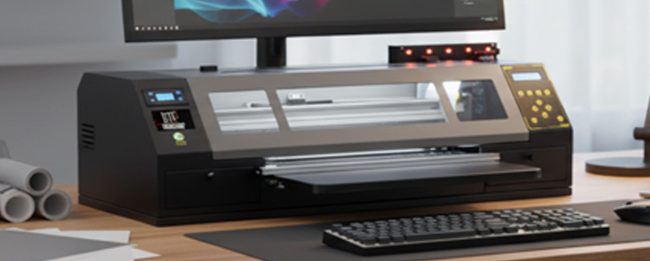
The DTF Magic 30PRO offers a strong entry point into professional textile printing. It combines compact design with reliable performance and smart engineering. This machine supports businesses that want quality without complexity. It also helps users scale into DTF printing with confidence. The Desktop printer for DTF Transfers concept defines its entire purpose. It gives users an accessible, professional printing solution. Overall, the 30PRO delivers consistency, flexibility, and value in one system. It stands as a smart choice for growing print businesses.

Contact us today for further details, samples or to arrange a demonstration
sales@themagictouch.co.uk or call 01582 671444
Cheap entry point or proper production setup?
This is where many businesses face the biggest decision. A low entry price can look attractive, especially for a company testing demand. If you are only producing occasional transfers, a modest setup may be enough for the early stage. But there is a difference between starting lean and starting with limitations that quickly hold the business back.
A true production-ready setup should help you maintain output quality, manage orders efficiently, and reorder consumables with confidence. It should also be teachable. If one operator can use the system but no one else in the business can step in, your production is fragile.
The cheapest route can work for some firms, but it depends on volume, expectations, and appetite for troubleshooting. Businesses that already have customers waiting for finished garments usually benefit from equipment chosen around reliability and support, not just affordability.
Why the full workflow matters more than the printer alone
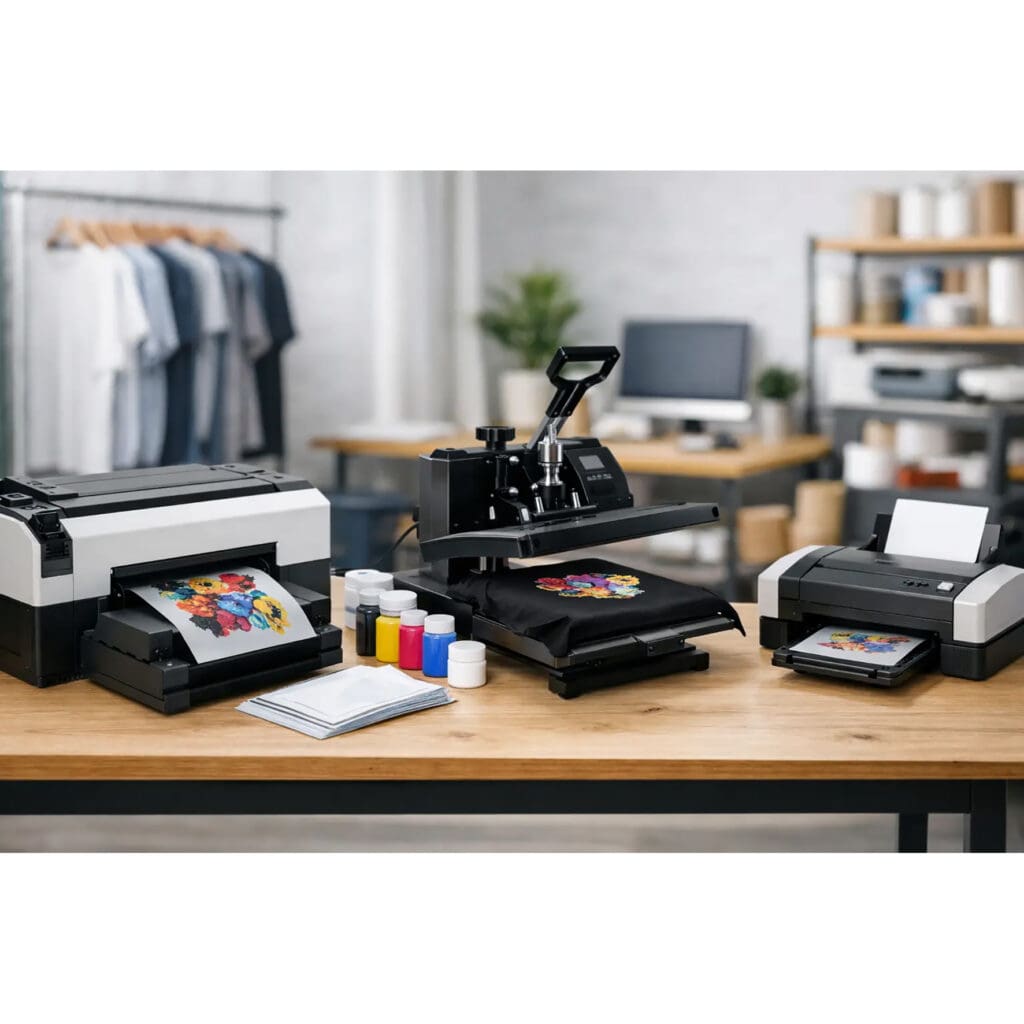
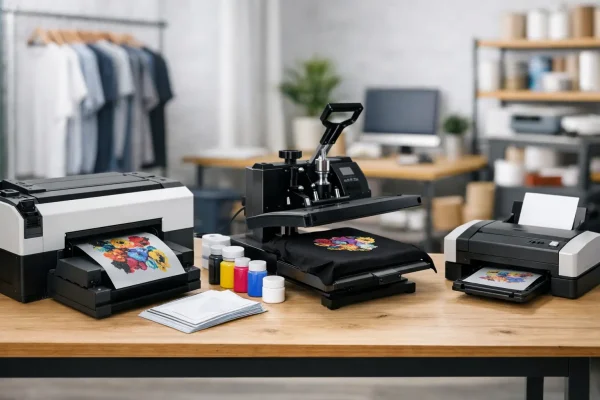
One of the most common mistakes in DTF purchasing is thinking only about the printer. In reality, the printer is one part of a wider production chain that includes film, ink, adhesive powder, curing, pressing, maintenance, and operator handling.
If curing is uneven, transfers may look acceptable at first but fail in wash performance. If powders and films are poorly matched, application can become inconsistent. If ink flow is not managed correctly, print stability can suffer. None of these issues are unusual, but they do show why a complete ecosystem matters.
For a small business, this joined-up approach reduces trial and error. It also makes forecasting easier. When consumables, machine setup, and technical advice come from a supplier that understands the full process, it becomes easier to achieve stable repeat results and protect margins.
That is one reason many growing UK businesses prefer to work with a specialist partner such as DTF Magic®, rather than treating DTF as a one-off online purchase. Commercial printing works best when support continues after delivery.
Matching the machine to your order profile
Not every small business needs the same production level. If your order book is mainly names, logos, and short-run graphics, your priorities may be ease of use, dependable print quality, and manageable daily maintenance. If you are supplying trade customers or handling larger garment volumes, speed, media handling, and workflow efficiency become more important.
It also depends on how DTF fits into your wider business. Some companies use it as a flexible addition to embroidery, vinyl, or screen print services. Others build their offer around DTF from the outset. In the first case, a balanced system may be ideal. In the second, capacity planning becomes more important, because early success can expose underpowered equipment quite quickly.
There is no single perfect answer. The right choice depends on job mix, staffing, available space, and growth plans over the next 12 to 24 months. Buying only for today can be short-sighted, but buying too far ahead can tie up capital unnecessarily.
DTF Magic 30PRO Desktop Printer
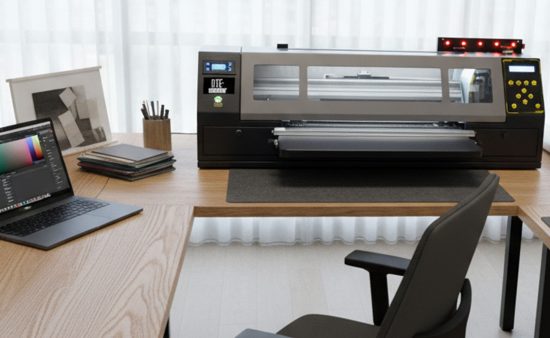
The DTF Magic 30PRO offers a strong entry point into professional textile printing. It combines compact design with reliable performance and smart engineering. This machine supports businesses that want quality without complexity. It also helps users scale into DTF printing with confidence. The Desktop printer for DTF Transfers concept defines its entire purpose. It gives users an accessible, professional printing solution. Overall, the 30PRO delivers consistency, flexibility, and value in one system. It stands as a smart choice for growing print businesses.
Contact us today for further details, samples or to arrange a demonstration
sales@themagictouch.co.uk or call 01582 671444
What good supplier support should look like
For commercial buyers, supplier support should be practical, accessible, and specific. A serious DTF equipment partner should be able to help with installation requirements, training, operational best practice, consumable guidance, and fault diagnosis. Ideally, they should also understand how to scale your setup when order volumes increase.
This matters because DTF is not just a box to plug in and forget. Like any production process, it needs correct setup and informed operation. The businesses that get the best results are usually the ones that receive proper onboarding and know where to get reliable advice when questions arise.
Support should also reduce risk. If your printer is central to order fulfilment, delays in technical response can affect revenue immediately. Friendly help is valuable, but commercial users also need competence, speed, and continuity.
Common buying mistakes to avoid
The most expensive mistake is buying on headline price alone. A machine that appears to save money upfront can create hidden costs through waste, downtime, and inconsistent transfer quality.
Another common issue is underestimating consumables and finishing equipment. Without suitable curing and pressing equipment, even a capable printer may fail to produce durable, professional results.
Some businesses also underestimate training. DTF is approachable, but that does not mean every operator will automatically get the best from it without guidance. Good habits around maintenance, environmental control, and pressing technique make a real difference.
Finally, dtf printers for small business, there is the mistake of buying without a clear production plan. If you do not know your likely order volume, target margin, and service offer, it becomes harder to choose the right setup. Equipment decisions are strongest when they are tied to how the business will actually make money.
Is DTF the right move for your small business?
For many garment decorators and print businesses, yes – provided the system is chosen with commercial reality in mind. DTF can offer flexibility, strong visual results, and a practical route into personalised apparel and transfer production. It is especially useful where order sizes vary and artwork detail matters.
But the best results usually come when businesses treat DTF as a production workflow, not simply a printer purchase. That means thinking about equipment, consumables, workspace, training, and support together. A smaller business does not need the biggest setup on the market. It does need a dependable one.
If you are investing in DTF printers for small business, the safest question is not “What is cheapest?” It is “What will help us produce confidently, consistently, and profitably from the start?” Ask that first, and the right system becomes much easier to identify.
DTF Magic 30PRO Desktop Printer
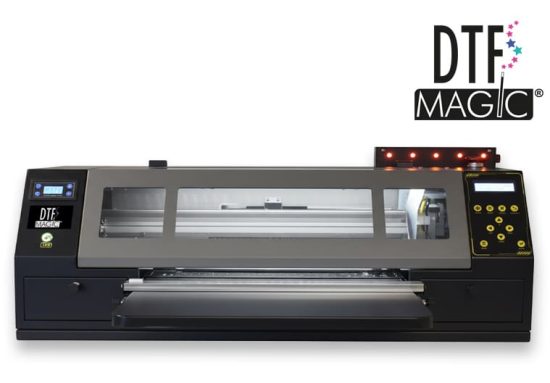
The DTF Magic 30PRO offers a strong entry point into professional textile printing. It combines compact design with reliable performance and smart engineering. This machine supports businesses that want quality without complexity. It also helps users scale into DTF printing with confidence. The Desktop printer for DTF Transfers concept defines its entire purpose. It gives users an accessible, professional printing solution. Overall, the 30PRO delivers consistency, flexibility, and value in one system. It stands as a smart choice for growing print businesses.